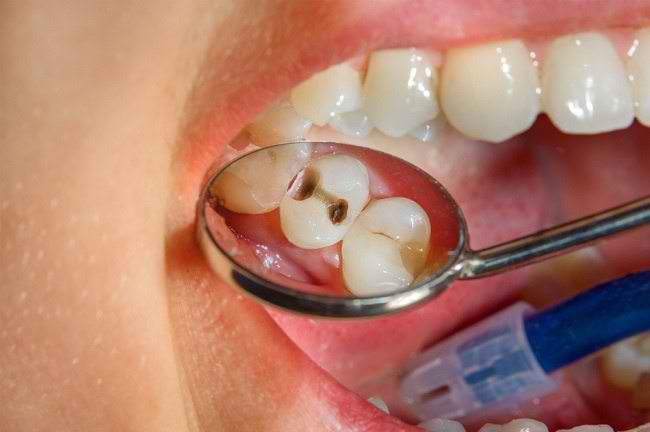

Cavities are a condition of damaged teeth due to erosion of the outermost layer of teeth (enamel). This condition is caused by the accumulation of bacteria in the mouth due to frequent consumption of sweet foods and poor oral hygiene. Cavities are a common complaint in teeth, both in adults and children. This condition is difficult to detect because it generally does not cause pain in the early stages. Therefore, dental check-ups need to be carried out regularly. Cavities in the teeth that are not treated immediately can get bigger. This can increase the risk of other dental problems, such as infection and tooth loss or loss.
Causes and Risk Factors of Cavities
Cavities start from plaque that sticks to the teeth. Dental plaque comes from food residue containing sugar and starch, which when it accumulates will become tartar. If not cleaned, this plaque will be converted into acid by natural bacteria in the mouth. The acid produced from plaque then slowly erodes the outer layer of the teeth. Over time, holes form in the teeth. If left untreated, bacteria and acid will enter deeper into the tooth pulp, which is the part of the tooth that consists of nerves and blood vessels.
Cavities can happen to anyone, but there are several factors that make someone more at risk of experiencing them, namely:
- Rarely brushing or flossing, especially after eating.
- Not using toothpaste or mouthwash containing fluoride.
- Consuming too many sweet foods and drinks, such as cakes, biscuits, candy, ice cream, and soda.
- Suffering from eating disorders, such as anorexia and bulimia.
- Suffering from acid reflux disease (GERD) and dry mouth.
- Being elderly so that the enamel begins to thin on its own and saliva production decreases.
- Regularly consuming supplements, vitamins, or herbal products that contain sugar.
Symptoms of Cavities
Symptoms of cavities in each person can be different, depending on the location and size of the hole that forms. When the hole is newly formed and is still small, symptoms may not be felt. However, when the hole has become larger, signs and symptoms that can appear include:
- Sensitive teeth.
- Toothache when biting.
- Pain in the teeth that occurs spontaneously without a clear cause.
- Pain or soreness when consuming sweet, cold, or hot foods or drinks.
- Visible holes in the teeth.
- White, brown, or black stains on the surface of the teeth.
Lakukan pemeriksaan ke dokter jika mengalami keluhan di atas, terutama jika disertai dengan gejala berikut:
- Swelling in the face.
- Bleeding gums.
- Difficulty chewing.
- Unbearable toothache that interferes with eating and sleeping.
Cavity Treatment
The doctor will begin the examination by asking about the symptoms experienced by the patient. Next, the dentist will spray water and tap the tooth suspected of having a cavity. To confirm the diagnosis, the doctor can take a dental X-ray. The goal is to check how far the damage to the tooth has occurred.
Treatment for cavities will be adjusted to the severity of the patient’s condition. Some medical actions that can be taken to treat cavities are:
- Fluoride treatment
For teeth that have new cavities, the doctor will provide toothpaste that has a higher fluoride content. Fluoride treatment can be given in liquid, gel, or foam form. This therapy aims to repair enamel and prevent cavities from getting bigger. Patients can use fluoride independently by applying it to their teeth or using it as toothpaste. However, doctors will generally install fluoride with a tool that fits the shape of the patient’s teeth so that all tooth surfaces can be ensured to be coated with this substance.
- Filling
Filling or tooth filling is the most common procedure to treat cavities. The doctor will start the filling by removing the damaged part of the tooth. After that, the tooth will be filled using special materials, such as composite resin, porcelain, gold, or silver. Please note that tooth fillings can be temporary or permanent. Permanent tooth fillings are usually only done if the cavity is only on the outer layer of the tooth or if the damage to the tooth root has been repaired.
- Dental crowns
A crown is a false crown that is placed over a damaged tooth. The procedure for installing a crown is generally performed to treat severe tooth damage or prevent damage to teeth that are starting to weaken. The procedure for installing a crown is done by scraping off the damaged part of the tooth and leaving a small part of the tooth to be the support for the false crown. False crowns can be made of gold, porcelain, or composite resin.
- Root canal treatment
Root canal or root canal treatment is performed if the damage has reached the inside of the tooth or the tooth root. This action aims to repair the damage without having to remove the tooth.
- Tooth extraction
Tooth extraction is performed if the damage is very severe and the tooth cannot be restored. Tooth extraction can be followed by the installation of dentures or dental implants, to fill the gap left by the extracted tooth. Complaints that arise due to cavities need to be immediately examined and treated by a dentist. However, if you haven’t had the chance to see a dentist, there are several ways that can be done at home to relieve pain, namely:
-
- Maintain dental hygiene by brushing all teeth, including cavities, even if it hurts.
- Use warm water to brush your teeth.
- Use a special toothbrush designed for sensitive teeth.
- Avoid foods and drinks that are too hot or too cold.
- Take over-the-counter cavity medication to relieve pain, such as mefenamic acid.
Complications of Cavities
Cavities can cause a number of complications if left untreated, such as:
- Difficulty chewing food.
- Persistent toothache.
- Broken or missing teeth.
- Swelling or pus around the cavity.
- Pulpitis, which is inflammation of the root canal.
- Dental abscess, which can trigger dangerous diseases, such as sepsis.
- Pulp polyps due to irritated cavities.
Cavity Prevention
Cavities can happen to anyone, especially to people who do not take care of their dental and oral health. To prevent this condition, there are several things that can be done, namely:
- Reduce the habit of snacking on sweet and starchy foods.
- Limit consumption of sweet or sour foods and drinks.
- Brush your teeth twice a day with fluoride toothpaste.
- Clean between your teeth with dental floss at least once a day.
- Check your dental and oral health with a dentist, at least twice a year.
In addition to the preventive measures above, you are also advised to consume the following foods and drinks to maintain dental health:
- Fruits and vegetables rich in fiber, such as apples, spinach, and cucumbers.
- Foods high in calcium, such as milk, cheese, sea fish, and nuts.
- Low-sugar gum containing xylitol.
- Black or green tea without sugar or sweeteners.
- Mineral water containing fluoride.