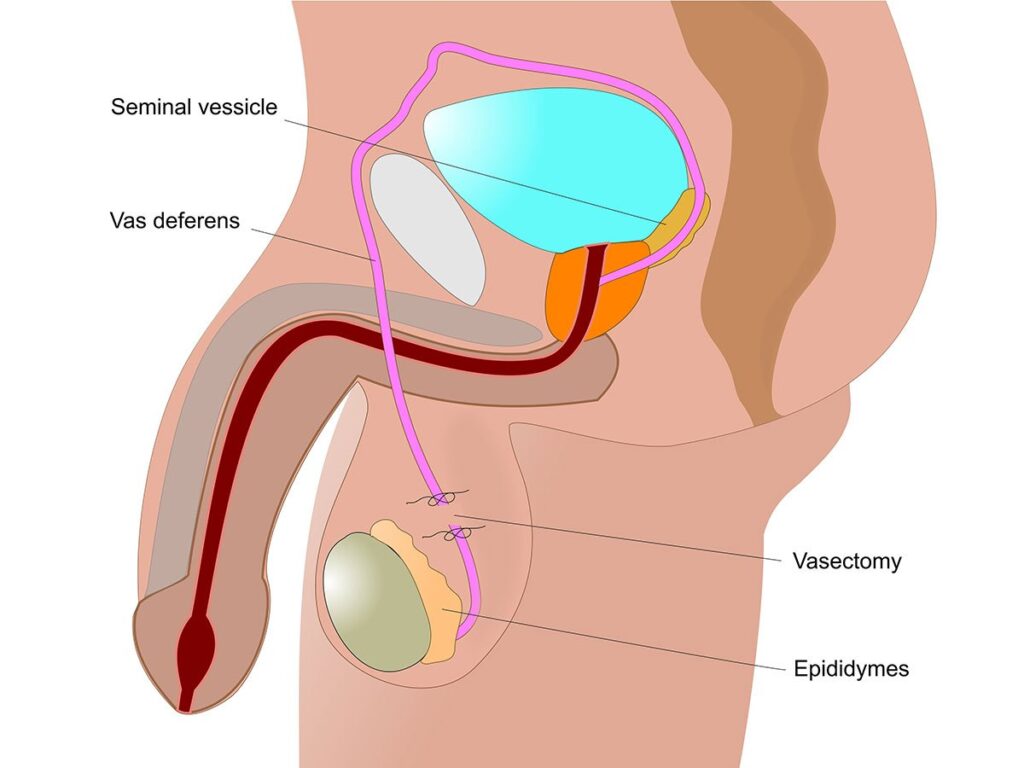

Understanding Vasectomy
Vasectomy is a contraceptive method for men who do not want to have any more children. Vasectomy is a contraceptive procedure for men which is carried out by cutting off the distribution of sperm to the semen. In this way, semen will not contain sperm, so pregnancy can be prevented. The vasectomy procedure is carried out through a minor surgical operation with local anesthesia administered to the testicles and scrotum area. In this procedure, the tube through which sperm passes from the testicles is cut and tied to prevent sperm from reaching the semen released during ejaculation during sexual intercourse.
Vasectomy is also known as sterilization or permanent contraception in men. This procedure has a relatively lower risk of complications, does not require much time for recovery, and is very effective in preventing pregnancy. Before carrying out this procedure, the doctor will perform a physical examination and other additional examinations to determine whether a client is suitable for using this method.
Vasectomy can be performed on patients who do not want to have more children. This contraceptive method requires relatively shorter hospital treatment time. However, the decision to have a vasectomy should be a mutual agreement with your partner. This is because the operation to reopen the sperm ducts is not always successful.
Conditions in which a vasectomy should not be performed
Vasectomy can be performed on men of any age. However, doctors usually do not recommend this method for men under 30 years of age and who have not had children. Special consideration also needs to be given to men with certain medical conditions, such as:
- Are taking anticoagulant and antiplatelet drugs, such as warfarin or aspirin.
- Suffering from an acute skin infection due to an accident or having scarring on the scrotum.
- Having anatomical abnormalities in the reproductive organs, such as a large varicocele or hydrocele.
- Suffering from blood disorders or excessive bleeding.
- Have an allergy or sensitivity to local anesthetics or antibiotics.
- Have had surgery on the genitals.
- Having recurrent urinary tract infections or genital infections.
Please remember that a vasectomy cannot prevent sexually transmitted infections. Therefore, continue to have sexual relations in a safe way, namely by using a condom or not changing partners.
Conditions for Performing a Vasectomy
Before performing a vasectomy, the doctor will usually carry out a thorough examination of the patient. The doctor will ask why the patient wants to have a vasectomy and the patient’s readiness for the procedure, to prevent regret in the future. Apart from that, the doctor will also explain about the vasectomy procedure, from preparation to complications that may occur.
The doctor will ask the patient to do the following things:
- Do not take blood thinning drugs, such as aspirin or warfarin, for 7 days before the vasectomy.
- Clean the genitals and shave the genital hair throughout the scrotum 1 day before the vasectomy is performed.
- Avoid consuming heavy meals and replace them with light snacks before a vasectomy.
- Bring tight-fitting underwear to wear after a vasectomy, to support the scrotum and reduce any swelling that occurs.
- Invite someone to accompany you and take you home after your vasectomy.
Vasectomy can be performed in a hospital or clinic. This procedure can be performed by a general surgeon or a urologist. The time for the vasectomy procedure ranges from 10-30 minutes. To perform a vasectomy, there are two surgical techniques that can be performed, namely the conventional technique and the technique without a scalpel. Here’s the explanation:
- Conventional technique
The following are the stages of a vasectomy procedure using conventional techniques:- The patient will be anesthetized first with local anesthesia in the testicles and scrotum area.
- The doctor will make 1-2 small incisions on the side of the scrotum, so that the doctor can reach the sperm duct (vas deferens).
- After that, the two sperm ducts are cut and the ends of each duct are stitched or closed using diathermy (an adhesive device with high temperature heating).
- Then, each incision will be stitched with thread that can be absorbed by the skin.
- Technique without cutting the sperm duct or without a scalpel
In a vasectomy using a technique without cutting the sperm ducts, the stages of the procedure are as follows: -
- The patient will be anesthetized first with local anesthesia in the testicles and scrotum area.
- The doctor will clamp the sperm duct (vas deferens) under the skin of the scrotum from the outside with clamps (tweezers).
- After that, the doctor will make a small hole in the skin above the sperm duct.
- The doctor will open the hole using a pair of special clamps to reach the sperm duct.
- The sperm duct is slightly perforated to insert the cautery needle.
- The cautery needle is inserted into the sperm duct, then electrified while slowly being pulled out. The goal is to burn the inner surface of the sperm duct which will then block the sperm duct.
Bleeding and pain in a vasectomy without cutting the sperm duct are lighter than conventional vasectomy techniques. Apart from cautery, blocking the sperm duct without having to cut it can also be done by installing a vasclip. However, this method is less effective when compared to vasectomy using cautery or conventional vasectomy.
Post Vasectomy
For 1–2 hours after the vasectomy, the patient can still feel the effects of the anesthesia on the scrotum. After the effects of the anesthesia wear off, the patient may feel some pain and swelling which will generally disappear within a few days. To relieve pain and swelling, patients are advised to compress the scrotum with an ice bag for at least 36 hours, rest for 24 hours, and use a bandage or tight underwear to support the scrotum for at least 48 hours after the vasectomy. If necessary, pain relievers, such as paracetamol, can also be taken.
Several other things that also need to be considered and done after a vasectomy are:
- Maintain personal hygiene by showering after surgery and drying the surgical area gently.
- Start normal activities gradually after 2-3 days after the vasectomy procedure.
- Avoid strenuous activities, such as exercising or lifting weights, for 3 days after a vasectomy, as they may cause pain or bleeding in the scrotum.
- Use other contraception to prevent pregnancy, because sperm usually remains in the vas deferens after 15-20 ejaculations.
- Don’t have sex for a few days after the vasectomy, until the pain goes away.
- Get tested at least 12 weeks after your vasectomy to make sure your semen is free of sperm.
- Use a condom when having sex, because a vasectomy cannot prevent sexually transmitted infections.
Complications of Vasectomy
Although rare, vasectomies can cause several complications, such as:
- Infection of the incision wound.
- Collection of blood (hematoma) in the scrotum.
- Sperm granuloma.
- Testicles feel full.
- Pain in the testicles.
If you feel any of the symptoms above, you should immediately consult a doctor. In order to get the right treatment.