
Kalimantan, the Indonesian portion of the island of Borneo, is a land of vast rainforests, diverse wildlife, and rich cultural heritage. This region, which covers the southern three-quarters of Borneo, is shared by four Indonesian provinces: West Kalimantan, Central Kalimantan, South Kalimantan, and East Kalimantan. With its complex history, unique cultures, and significant environmental importance, Kalimantan is a region that warrants deeper exploration. This blog post aims to delve into the geographical, cultural, historical, and contemporary aspects of Kalimantan, shedding light on its significance and the challenges it faces.
Geography and Natural Beauty
Kalimantan is renowned for its extensive rainforests, which are among the oldest in the world. These forests are home to a staggering variety of flora and fauna, including many species found nowhere else on Earth. The island’s diverse ecosystems range from coastal mangroves and peat swamps to montane forests and highland meadows.
The majestic Kapuas River, the longest river in Indonesia, flows through West Kalimantan, providing a lifeline for transportation and sustenance for local communities. Similarly, the Mahakam River in East Kalimantan plays a crucial role in the lives of the inhabitants, supporting fishing and transportation.
One of the most famous natural landmarks in Kalimantan is the Tanjung Puting National Park in Central Kalimantan, which is globally renowned for its population of wild orangutans. This national park, covering an area of 416,040 hectares, also supports other endangered species such as the proboscis monkey, clouded leopard, and various bird species. Tourists from around the world visit Tanjung Puting to experience the unique opportunity to see orangutans in their natural habitat.
Another notable region is the Kayan Mentarang National Park in North Kalimantan, which is the largest protected area of rainforest in Borneo. This park not only boasts incredible biodiversity but also preserves the cultural heritage of the indigenous Dayak people who live within its boundaries.
Cultural Diversity
Kalimantan is a cultural mosaic, home to numerous indigenous ethnic groups, each with its own distinct traditions, languages, and ways of life. The Dayak people, who are the original inhabitants of Borneo, form a significant portion of the population. They are divided into various subgroups, such as the Kenyah, Kayan, Iban, and Bidayuh, each with unique cultural practices and traditional attire.
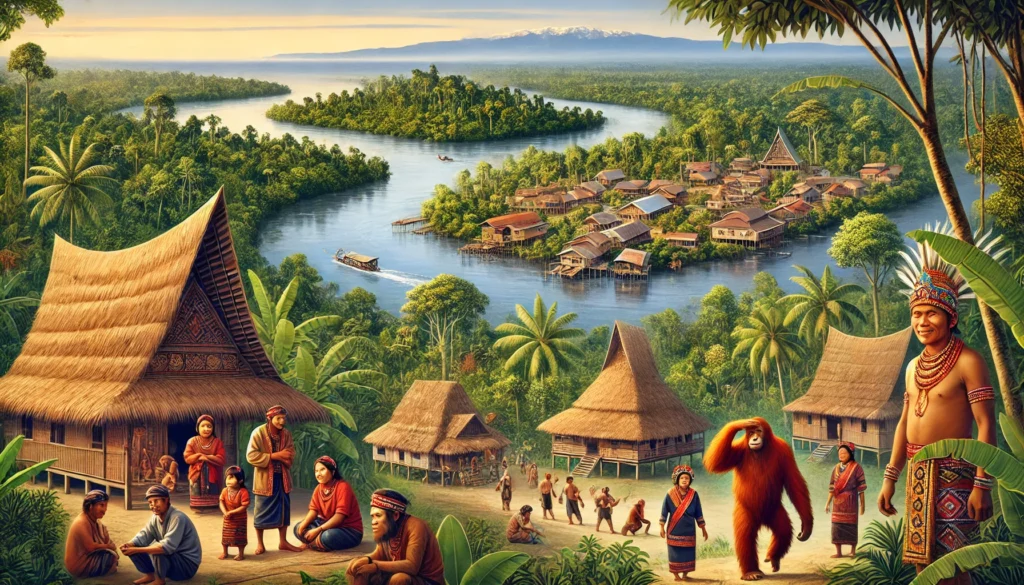
The traditional longhouses of the Dayak people, known as rumah panjang, are a striking feature of their culture. These longhouses, made of wood and built on stilts, can accommodate multiple families under one roof. They serve as both homes and community centers where social activities, ceremonies, and meetings take place.
Dayak culture is rich in art and craft, particularly in wood carving, beadwork, and weaving. Their intricate beadwork and woven textiles are not only beautiful but also hold cultural significance, often used in rituals and traditional ceremonies. The Dayak also have a deep spiritual connection to the forest, which is reflected in their traditional beliefs and practices.
In addition to the Dayak, Kalimantan is also home to the Banjar people in South Kalimantan. The Banjar have their own distinct culture, heavily influenced by Islam, and are known for their vibrant floating markets, where traders sell goods from boats on the river.
Historical Context
Kalimantan has a rich history that includes ancient kingdoms, colonial rule, and the integration into the modern state of Indonesia. In ancient times, the region was part of various kingdoms, such as the Kutai Kingdom, which dates back to the 4th century. The Kutai Martadipura Kingdom in East Kalimantan is one of the oldest Hindu kingdoms in Indonesia, with historical inscriptions that provide insight into the early history of the region.
During the colonial era, Kalimantan was influenced by the Dutch and British, who established trade posts and sought control over the island’s resources. The island’s strategic location and wealth of natural resources made it a valuable asset for colonial powers.
In the 20th century, Kalimantan played a significant role in Indonesia’s struggle for independence. The region saw resistance against Dutch colonial rule, and many locals participated in the independence movement. After Indonesia gained independence in 1945, Kalimantan became an integral part of the new nation.
Contemporary Issues
Today, Kalimantan faces several challenges, particularly related to environmental conservation and sustainable development. Deforestation, largely driven by logging, palm oil plantations, and mining, poses a significant threat to the region’s rainforests and biodiversity. The loss of habitat has severe consequences for wildlife, including endangered species such as orangutans and proboscis monkeys.
Illegal logging and land conversion for agriculture have also led to conflicts with indigenous communities, who rely on the forest for their livelihoods and cultural practices. Efforts to protect the environment and promote sustainable development are ongoing, but balancing economic growth with conservation remains a complex issue.
Another contemporary challenge is the planned relocation of Indonesia’s capital from Jakarta to East Kalimantan. This ambitious project aims to address the overcrowding and environmental degradation in Jakarta, but it also raises concerns about the environmental impact and displacement of local communities in Kalimantan.
Efforts Toward Change
Despite these challenges, there are numerous initiatives aimed at addressing the issues facing Kalimantan and promoting sustainable development. Conservation organizations, both local and international, are working to protect the rainforests and endangered species. Programs focused on reforestation, wildlife protection, and sustainable agriculture are making strides in preserving the region’s natural heritage.
The Indonesian government has also implemented policies to reduce deforestation and promote sustainable land use. Efforts to combat illegal logging and promote certification of sustainable palm oil are part of a broader strategy to balance economic development with environmental conservation.
In addition to environmental efforts, there are initiatives aimed at preserving and promoting the cultural heritage of Kalimantan. Cultural festivals, such as the Erau Festival in East Kalimantan and the Borneo Arts Festival, celebrate the region’s diverse cultures and promote tourism.
Conclusion
Kalimantan is a region of extraordinary natural beauty, cultural richness, and historical significance. Its vast rainforests, diverse wildlife, and unique cultural traditions make it a vital part of Indonesia’s heritage. However, the region also faces significant challenges that require concerted efforts from all stakeholders to address. By promoting sustainable development, protecting the environment, and preserving cultural heritage, there is hope for a brighter future for Kalimantan and its people.