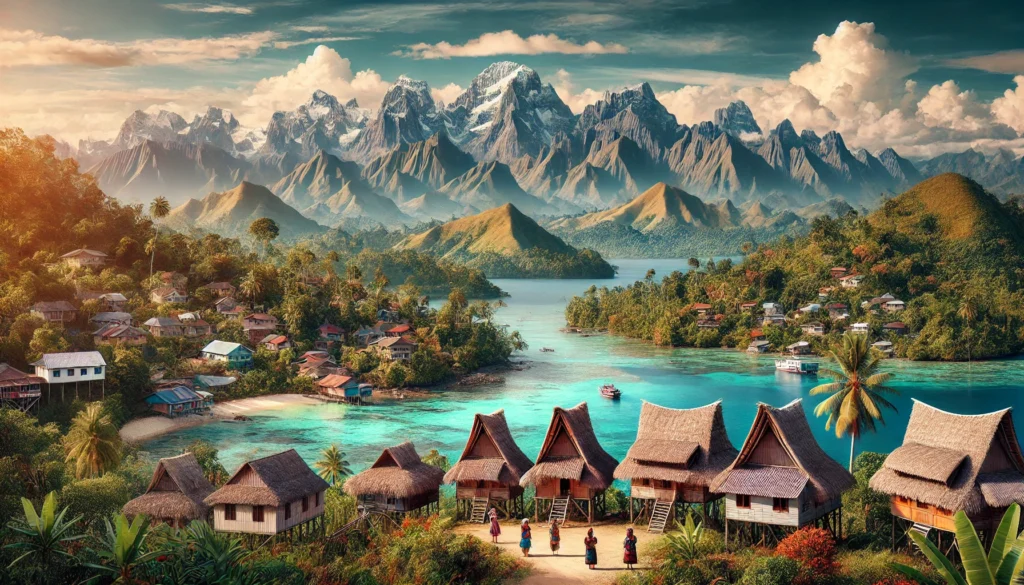

Papua, located on the western half of the island of New Guinea, is a province in Indonesia known for its stunning landscapes, diverse wildlife, rich cultural heritage, and complex history. Despite its beauty and cultural wealth, Papua has faced significant challenges, including political unrest and struggles for autonomy. This blog post aims to explore the multifaceted nature of Papua, delving into its geography, culture, history, and the current issues facing its people.
Geography and Natural Beauty
Papua is renowned for its breathtaking natural beauty, which includes vast rainforests, towering mountain ranges, pristine beaches, and rich marine biodiversity. The province is home to the Lorentz National Park, a UNESCO World Heritage site that spans over 2.35 million hectares and includes a variety of ecosystems from mangroves and rainforests to alpine tundra and equatorial glaciers.
The central highlands of Papua are dominated by the Jayawijaya Mountains, where the peak of Puncak Jaya (Carstensz Pyramid) rises to 4,884 meters, making it the highest point between the Himalayas and the Andes. This region’s rugged terrain and remote locations have preserved its natural environment and indigenous cultures.
Papua’s coastal areas boast some of the world’s most spectacular coral reefs and marine life, particularly around the Raja Ampat Islands. This archipelago is a diver’s paradise, featuring hundreds of islands, crystal-clear waters, and an extraordinary variety of marine species. The biodiversity in Raja Ampat is unparalleled, with scientists identifying over 1,500 species of fish and 600 species of coral in the area.
Cultural Diversity
Papua is incredibly diverse, with hundreds of indigenous ethnic groups and languages. Each group has its own distinct culture, traditions, and way of life. The Dani people, for instance, live in the Baliem Valley and are known for their impressive agricultural practices, growing sweet potatoes and raising pigs. They are also famous for their elaborate traditional attire and ceremonial practices, which include the use of unique headdresses, body paint, and woven fabrics.
The Asmat people, residing along the southwestern coast, are renowned for their intricate woodcarving skills. Their art, which often depicts ancestors and spiritual figures, plays a crucial role in their cultural identity and social structure. Asmat carvings are highly sought after by collectors and museums around the world for their detailed craftsmanship and symbolic meaning.
Traditional ceremonies and festivals are an integral part of life in Papua. The Baliem Valley Festival, for example, is an annual event that showcases the region’s cultural heritage through mock tribal wars, traditional dances, music, and crafts. This festival not only preserves the cultural practices of the highland tribes but also promotes tourism and cross-cultural understanding.
Historical Context
Papua’s history is marked by a series of significant events that have shaped its current socio-political landscape. The region was first encountered by European explorers in the 16th century, with the Spanish and Portuguese being among the earliest to arrive. However, it was the Dutch who eventually established colonial control over the area in the 19th century, integrating it into the Dutch East Indies.
Following Indonesia’s declaration of independence in 1945, Papua became a contested territory. The Dutch initially retained control, but Indonesia sought to incorporate it into the new republic. This dispute culminated in the New York Agreement of 1962, brokered by the United Nations, which transferred administration of Papua to Indonesia pending a plebiscite. The controversial Act of Free Choice in 1969, in which selected tribal leaders voted for integration with Indonesia, remains a point of contention, with many Papuans arguing that the process was not conducted fairly.
Contemporary Issues
Today, Papua continues to face significant challenges. The province has experienced ongoing political unrest, with a persistent independence movement seeking greater autonomy or complete independence from Indonesia. Human rights organizations have reported numerous instances of abuse and violence, contributing to a complex and often volatile situation.
Economic development in Papua has also been uneven, with significant disparities between the urban and rural areas. While the region is rich in natural resources, including gold, copper, and natural gas, the benefits of these resources have not been evenly distributed. Large-scale mining operations, such as the Grasberg mine operated by Freeport-McMoRan, have been the source of environmental degradation and local grievances.
Efforts Toward Change
Despite these challenges, there are efforts underway to address the issues facing Papua and improve the lives of its people. The Indonesian government has implemented special autonomy laws aimed at providing greater self-governance and allocating more resources for development. However, the effectiveness of these measures is still debated, with many Papuans feeling that more needs to be done to address their concerns.
Local and international NGOs are also working to support education, healthcare, and sustainable development in Papua. Initiatives to preserve the environment, promote cultural heritage, and empower indigenous communities are essential in fostering long-term positive change.
Conclusion
Papua is a land of striking contrasts and enduring resilience. Its natural beauty, cultural diversity, and rich history make it a unique and fascinating part of Indonesia. However, the province also faces significant challenges that require concerted efforts from all stakeholders to resolve. By fostering understanding, promoting sustainable development, and respecting the rights and aspirations of the Papuan people, there is hope for a brighter future for this remarkable region.


