
Understanding GERD
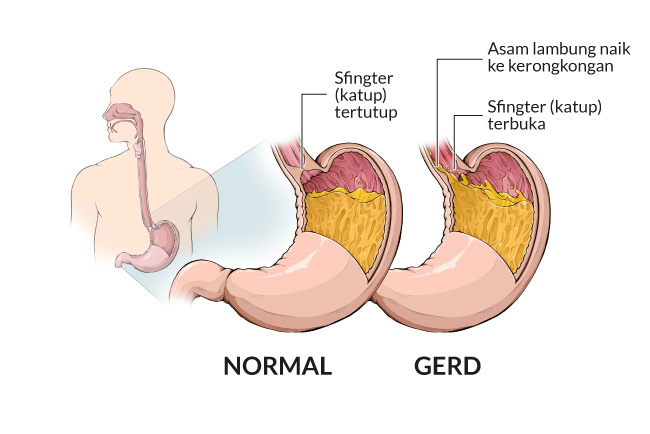
GERD is a disease that occurs when stomach acid rises into the esophagus. Symptoms of GERD can include a burning sensation in the chest and stomach, a bitter taste in the mouth, heartburn, nausea, and difficulty swallowing. The lower esophageal sphincter (LES) muscle normally opens when swallowing, then closes after food goes down to the stomach. However, this muscle can weaken, for example due to illness or an unhealthy lifestyle. The LES muscle that cannot close completely can cause stomach acid to rise into the esophagus. This condition causes symptoms of GERD (gastroesophageal reflux disease) or acid reflux disease.
Causes of GERD
The cause of GERD is the weakening of the LES muscle so that it is unable to hold the contents of the stomach or stomach acid from rising into the esophagus. If it occurs continuously, this condition can irritate the lining of the esophagus and cause inflammation.
There are several things that can cause GERD, namely:
- Obesity.
- Pregnancy.
- Advanced age.
- The habit of lying down or sleeping after eating.
- Gastroparesis, which is a weakening of the stomach wall muscles so that stomach emptying is slow.
- Connective tissue disorders, such as scleroderma or lupus.
- Congenital diseases, such as hiatal hernia and esophageal atresia.
- Having had surgery in the chest or upper abdomen that injured the esophagus.
- Side effects of certain medications, such as aspirin, ibuprofen, benzodiazepines, antidepressants, or hormone therapy drugs for menopause.
In addition, there are several factors that can worsen GERD symptoms:
- Smoking habits or frequent exposure to cigarette smoke (passive smokers).
- Extreme diets or late eating during fasting.
- Often eating large portions or eating at midnight.
- Consuming acidic, fatty, or spicy foods.
- Consuming caffeinated, alcoholic, or carbonated drinks.
- Experiencing anxiety disorders or unmanaged stress (GERD anxiety).
Symptoms of GERD
GERD can be experienced by all ages, both adults and children. When stomach acid rises, GERD symptoms that can appear include:
- Burning sensation in the chest (heartburn).
- Sour or bitter taste in the mouth.
- Nausea and vomiting.
- Bad breath.
- Hoarseness.
- Chest pain, a feeling of wind in the chest, or intermittent heartburn.
- Pain when swallowing or difficulty swallowing.
- A lump in the throat.
- Sore or inflamed esophagus (esophagitis).
- Bloating or frequent burping.
- Hoarseness.
- Sensitive teeth and a sour taste in the mouth.
In addition to the above symptoms, GERD can cause complaints similar to asthma, such as persistent (chronic) coughing, shortness of breath, or wheezing. GERD symptoms usually worsen when sufferers finish eating large or fatty meals. Likewise when lying down, bending over, and resting at night.
Meanwhile, GERD symptoms that can occur in infants and children include:
- More fussy than usual or crying after eating.
- Frequent hiccups or burping.
- Reluctant to eat or eating only a little.
- Bad breath.
- Hoarseness.
- Frequent vomiting.
- Difficulty sleeping.
- Wheezing.
You or your child are advised to see a doctor if you experience any of the following:
- GERD symptoms do not improve or even worsen after taking antacids.
- GERD complaints occur more frequently during the last 3 weeks.
- Difficulty swallowing.
- New, more serious symptoms appear, such as persistent vomiting or vomiting with blood, or weight loss without a clear cause.
Seek immediate medical attention at the nearest hospital emergency room if you experience chest pain that spreads to the jaw and arms accompanied by shortness of breath and cold sweats. These symptoms can indicate a heart attack that must be treated immediately by a doctor.
GERD Treatment
To diagnose GERD, the doctor will first ask about the following:
- Symptoms experienced.
- How often do the patient’s complaints occur.
- Food or drinks that may cause symptoms.
- Activities or movements that may worsen symptoms.
- Diseases that have been or are currently being suffered.
- Medications that are being consumed.
After that, the doctor will perform a physical examination, followed by the supporting examinations below to confirm the diagnosis or look for possible complications:
- Endoscopy, to detect inflammation of the esophagus due to rising stomach acid. This examination can also be done to take samples of esophageal tissue for examination under a microscope.
- Measuring the acidity level (pH) of the esophagus, to measure the acidity level of the esophagus when the patient is active, for example eating or sleeping.
- X-ray of the esophagus and stomach, to look for narrowing of the esophagus that may interfere with swallowing.
- Esophageal manometry, to check the rhythm of muscle movements during swallowing, as well as measure the strength of the esophageal muscles.
GERD can usually heal on its own with lifestyle changes and avoiding habits that can trigger or worsen GERD. Using over-the-counter antacids can also help treat GERD.
To help overcome GERD symptoms, there are several independent efforts that can be done, namely:
- Lose weight if you are obese.
- Avoid foods and drinks that cause acid reflux, such as fatty foods, caffeinated and alcoholic beverages.
- Eat slowly in small portions, but often.
- Do not bend over, sit back, or lie down, at least until 2 hours after eating.
- Avoid wearing tight clothing so as not to put pressure on the stomach.
- Do not smoke.
- Limit or avoid drinking alcohol.
- Sleep on your left side or use an extra pillow to raise your body position from the waist up.
- Take medication to treat acid reflux, such as antacids or alginic acid.
If self-treatment efforts are not effective in curing GERD, the doctor can prescribe medication or suggest surgery. Here is the explanation:
Medications that can be prescribed by a doctor can include:
- H2 antagonists, such as cimetidine or famotidine
- Proton pump inhibitors, such as esomeprazole, lansoprazole, omeprazole, or pantoprazole
- Prokinetics, such as metoclopramide or domperidone
If all of the above treatment methods fail to relieve GERD symptoms, the doctor will recommend a surgical procedure. Surgery can also be performed if the condition causes complications. These types of surgery include:
- Fundoplication or LES muscle binding
Fundoplication can be done by making a keyhole incision (arthroscopy). This surgery aims to prevent stomach acid from rising by binding the upper part of the stomach or the area around the LES muscle. Fundoplication can be done if the patient also suffers from a hiatus hernia. - LINX device placement
In this procedure, a magnetic ring-shaped device is wrapped around the LES muscle. The goal is to keep the area open only when food or drink passes through the esophagus.
Complications of GERD
If left untreated, GERD can lead to a number of the following complications:
- Esophagitis, which is inflammation of the lining of the esophagus characterized by pain and difficulty swallowing.
- Narrowing of the esophagus due to scar tissue formation.
- Barrett’s esophagus, which is a precancerous condition of the esophagus.
- Pulmonary aspiration, which is when stomach acid enters the lungs.
Prevention of GERD
Prevention of GERD can be done by improving eating, drinking, and lifestyle patterns. Some efforts that can be carried out are:
- Maintain an ideal body weight.
- Lose weight if you are obese.
- Avoid fatty or spicy foods, as well as drinks that are sour, caffeinated, alcoholic, or carbonated.
- Do not lie down or sleep immediately after eating, at least for 2–3 hours.
- Limit the use of medications, such as aspirin, ibuprofen, or naproxen.
- Do not smoke.
- Exercise stress management, such as yoga or meditation.
- Wear loose clothing or pants so as not to press on the stomach.


