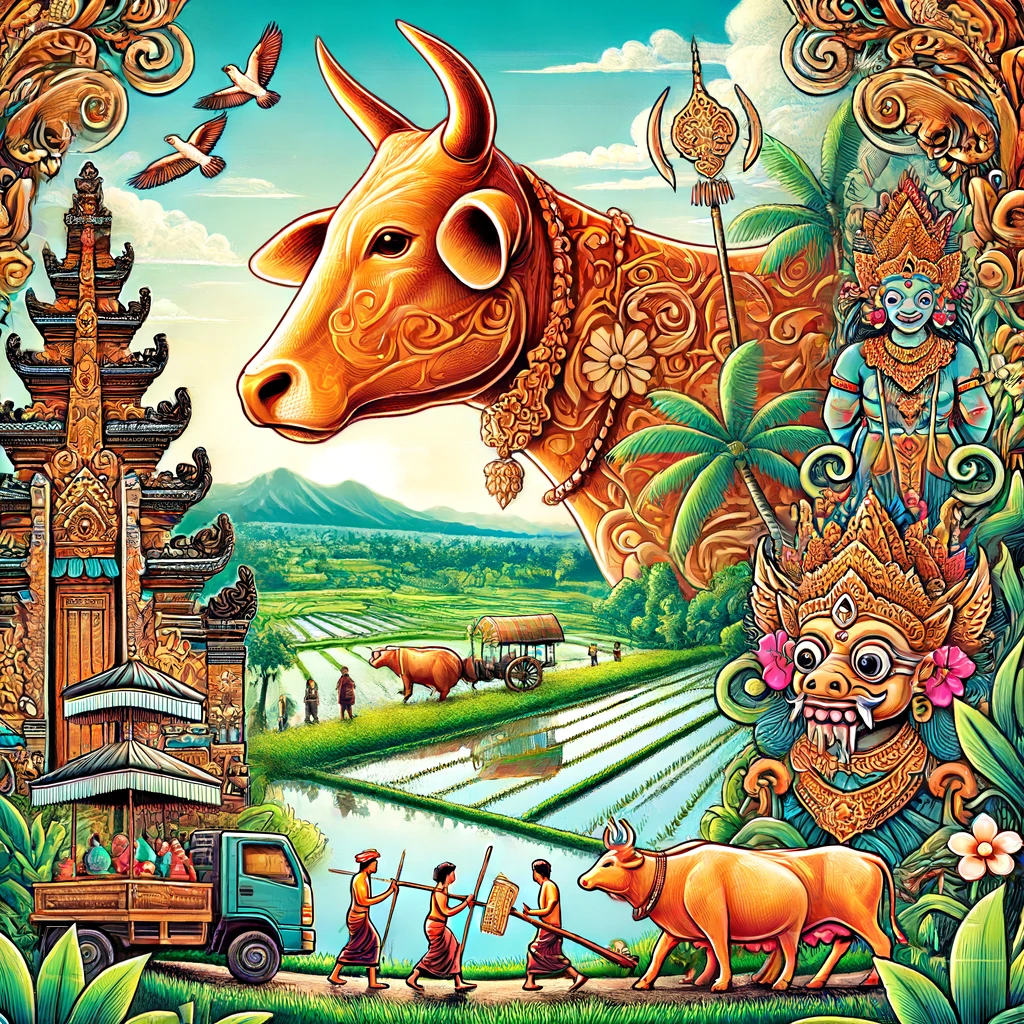


Cows have held a revered position in many cultures around the world, but their significance is particularly profound in Bali and Hinduism. In Bali, an Indonesian island known for its rich cultural heritage and predominantly Hindu population, cows are not just agricultural assets but sacred beings intertwined with spiritual beliefs and daily life. This blog post explores the multifaceted importance of cows in Balinese society and Hindu religion, delving into their historical, religious, cultural, and economic roles.
Historical Significance of Cows in Bali
The veneration of cows in Bali can be traced back to the spread of Hinduism to the island, which began around the 1st century CE through the influence of Indian traders and scholars. The integration of Hindu beliefs into Balinese culture led to the cow becoming a symbol of prosperity, fertility, and the sustenance of life.
Religious Importance in Hinduism
In Hinduism, cows are considered sacred and are revered as a symbol of non-violence, purity, and motherhood. The cow is often associated with various deities, such as Krishna, who is often depicted playing his flute among cows and calves, symbolizing the nurturing aspects of divinity. The protection of cows is deeply embedded in Hindu scriptures, including the Vedas, Upanishads, and Puranas, which underscore the cow’s sanctity and the moral duty to protect and honor them.
- Cow as a Symbol of Ahimsa: Ahimsa, or non-violence, is a core principle of Hinduism. The cow, being a gentle and docile creature, epitomizes this principle. By venerating the cow, Hindus express their commitment to non-violence and compassion towards all living beings.
- Kamadhenu – The Divine Cow: In Hindu mythology, Kamadhenu is the divine cow of plenty, believed to grant all desires. This celestial being symbolizes the benevolent nature of cows and their role in providing nourishment and support to human life.
- Yajnas and Rituals: Cows are integral to many Hindu rituals and yajnas (sacrificial rites). The products derived from cows, such as milk, ghee (clarified butter), and dung, are considered pure and essential for various religious ceremonies. Ghee, in particular, is used in fire sacrifices (homas), which are believed to purify the environment and the soul.
Cultural Significance in Balinese Society
In Bali, the reverence for cows is manifested in various cultural practices and traditions. The Balinese people incorporate the cow into their agricultural practices, arts, and community life, reflecting the animal’s central role in sustaining both their physical and spiritual well-being.
- Agricultural Practices: Cows are crucial to Balinese agriculture, particularly in rice farming. They are used for plowing fields and their manure is an important natural fertilizer, contributing to the island’s sustainable farming practices.
- Art and Symbolism: The cow is a common motif in Balinese art, appearing in carvings, paintings, and sculptures. These artistic representations often depict cows in serene and pastoral settings, highlighting their peaceful nature and their harmony with the environment.
- Festivals and Ceremonies: The cow is featured prominently in Balinese festivals and ceremonies. One such ceremony is the “Ngaben” or cremation ritual, where cow-shaped effigies called “Lembu” are used to symbolize the vehicle that transports the soul to the afterlife. This practice underscores the belief in the cow’s spiritual purity and its role in the cycle of life and death.
Economic Importance
Beyond their cultural and religious significance, cows play a vital economic role in Balinese society. The island’s economy, while heavily reliant on tourism, also benefits significantly from agriculture and animal husbandry, where cows are indispensable.
- Dairy Production: Cows are a source of milk, which is used to produce various dairy products that are essential to the Balinese diet. Dairy farming not only provides nutrition but also offers economic opportunities for local farmers.
- Livestock Trade: The trade of cattle is an important economic activity in Bali. The sale of cows and their by-products contributes to the livelihoods of many Balinese families, supporting the local economy.
- Organic Fertilizer: Cow manure is highly valued as an organic fertilizer in Bali’s predominantly agrarian society. It is used to enrich the soil, promoting sustainable farming practices that are crucial for the island’s food security.
Challenges and Conservation Efforts
Despite their revered status, cows in Bali face several challenges, including habitat loss, changes in agricultural practices, and the impact of tourism. Efforts to conserve and protect cows are therefore essential to maintain their cultural, religious, and economic significance.
- Habitat Preservation: Urbanization and the expansion of tourism infrastructure have led to the reduction of grazing lands for cows. Efforts to preserve these habitats are crucial for the well-being of the cattle population.
- Sustainable Farming Initiatives: Promoting sustainable farming practices that incorporate cow manure and organic methods can help maintain the ecological balance and support the health of the cow population.
- Educational Programs: Raising awareness about the importance of cows in Balinese culture and Hinduism through educational programs can foster a deeper appreciation and commitment to their protection among the younger generation.
Conclusion
The cow’s importance in Balinese culture and Hinduism is multifaceted, encompassing religious, cultural, and economic dimensions. As a symbol of non-violence, fertility, and prosperity, the cow is deeply embedded in the spiritual and everyday life of the Balinese people. Preserving this sacred animal is not only a matter of cultural heritage but also crucial for the sustainable development and ecological health of Bali. By understanding and respecting the cow’s role, we can contribute to a more harmonious coexistence with nature and uphold the values of compassion and reverence that are central to both Balinese culture and Hinduism.


