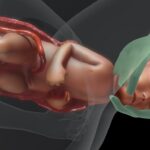
Normal delivery is the birth method most desired by pregnant women. Because vaginal delivery is considered to be a faster recovery process than caesarean delivery. So, mothers can leave the hospital more quickly and immediately have beautiful times with their babies at home. However, normal labor is often confused with spontaneous labor. Even though both are vaginal births, it turns out they are different.
Definition of spontaneous labor
Spontaneous labor is a vaginal birth process that takes place without the use of certain tools or drugs, be it induction, vacuum, or other methods. So, this birth really only relies on the mother’s energy and effort to push the baby out. This delivery can be carried out with a hind-head presentation (the fetus is born head first) or a breech presentation.
Difference between spontaneous labor and normal labor
Spontaneous labor is similar to normal labor, but both have differences. The difference lies in the use of tools and also the position of the baby at birth. As previously explained, spontaneous labor relies more on the mother’s energy and effort. So, this labor does not require induction, vacuum, or other methods to induce labor so that the baby can be born normally. Meanwhile, if labor occurs with the help of induction or vacuum, then this labor is considered a normal labor.
These two types of labor also have differences in terms of the percentage or position of the baby at birth. In spontaneous labor, labor can occur in the back of the head (the fetus is born head first) or the buttocks (breech). Meanwhile, with normal delivery, labor usually involves more attention to the back of the head.
Spontaneous labor process
The length of the labor process certainly varies for each pregnant woman. When a mother gives birth for the first time, this process tends to last 12 to 24 hours starting from the beginning of opening. Meanwhile, if the mother has already given birth, the next birth process usually occurs more quickly, around 6 to 8 hours.
Before facing spontaneous labor, the mother will experience the following phases, a brief summary of the spontaneous labor process, including:
- Pregnant women will experience rupture of membranes after contractions and reach 9th opening or complete opening.
- When the opening is 10, or reaches 10 cm and is called complete opening, bleeding begins to occur.
- The midwife or doctor will guide the mother to push and start spontaneous labor.
- After the baby comes out, the baby will be brought closer to the mother and begin the Early Breastfeeding Initiation (IMD) process.
- After that, the baby’s umbilical cord will be cut.
- The baby is cleaned and put in a swaddling cloth for warmth.
- The placenta will come out by itself around 15-30 or up to 60 minutes after the baby comes out.
- Bleeding will continue to occur during the process of expelling the placenta, even after it has been expelled.
- The vagina will be stitched, this is done if necessary.
However, not all pregnant women can immediately undergo spontaneous labor. There are several conditions that allow a mother to switch to a cesarean delivery if the mother experiences the following things:
- Have had a caesarean section once or twice or have had uterine surgery.
- Placenta previa, which is a condition where the placenta covers part or all of the cervix.
- Herpes virus with active lesions.
- Untreated HIV infection.
Preparation before undergoing spontaneous labor
Nowadays there are many classes available for pregnant women that you can use to find out information about the birth you want. Mothers can ask various things that may be causing confusion and fear for mothers, including:
- How to know the signs when a pregnant woman will give birth.
- Possible complications that may occur during pregnancy and childbirth.
- Ways to relieve pain such as hypnobirthing, either with relaxation methods or epidurals.
- How to work together with birth companions (husband and family).
- Postnatal care, including postpartum care.
- How to care for a newborn.
- Know about health care for female organs after childbirth and during the postpartum period, and so on.
Before giving birth, keep the mother in a relaxed position, get enough food and fluids, and think positively. The reason is, feelings of fear, nervousness and tension will release the hormone adrenaline which can slow down the labor process.