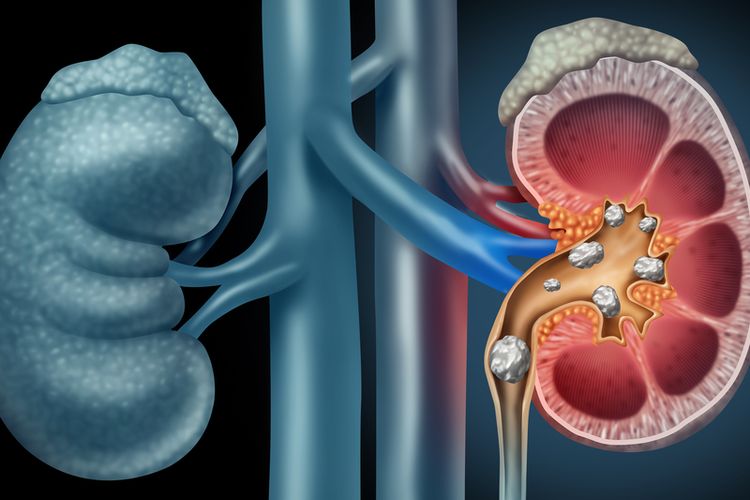

Understanding Kidney Stones
Kidney stone disease or nephrolithiasis is a condition caused by the formation of solid deposits in the kidneys that come from chemicals in the urine. The size of kidney stones can range from as small as a grain of sand to as large as a pea. Kidney stones can occur along the urinary tract, namely from the kidneys, ureters (the tubes that carry urine from the kidneys to the bladder), bladder, and urethra (the tube that carries urine out of the body).
Kidney stones can move and pass through the urinary tract. Kidney stones that move, especially large ones, will have difficulty passing through the urinary tract. If this condition occurs and causes pain, medical treatment is needed immediately. If diagnosed and treated early, this condition generally does not cause permanent damage to kidney function.
Causes of Kidney Stones
Kidney stones form when urine contains more chemicals than fluids. These chemicals can form crystals in the kidneys and stick to each other. Some examples of these substances are calcium, oxalic acid, and uric acid. Kidney stones can also form when the body lacks substances that prevent crystals from sticking together, making it easier for kidney stones to form.
Based on the substances that form them, kidney stones can be divided into four types, namely:
- Calcium Stones
Calcium stones, usually in the form of calcium oxalate stones, are the most common type of kidney stones. They occur when urine contains a lot of calcium (hypercalciuria) and the body has high levels of oxalate. Oxalate is produced by the liver and is obtained from food intake, such as certain vegetables and fruits, nuts, and chocolate.
High levels of calcium and oxalate in the urine can also be caused by the following conditions:
-
-
- Eating foods high in calcium oxalate.
- Taking high doses of vitamin D supplements.
- Having side effects from bowel surgery.
- Taking migraine or anti-seizure medications.Having kidney disease.
-
- Uric Acid Stones
This type of kidney stone is formed due to high levels of uric acid in the urine. This condition can be caused by consuming foods high in purines, lack of fluids, and a history of gout. - Struvite Stones
Struvite stones are formed by a mixture of magnesium, phosphate, and calcium carbonate in urine. Struvite stones can form and grow rapidly. The cause of this type of kidney stone is an infection, such as a urinary tract infection. - Cystine Stones
These kidney stones are among the rarest. Cystine stones are formed due to a genetic disease called cystinuria. This hereditary disease causes the kidneys to excrete too much amino acid.
Kidney Stone Risk Factors
Although it can happen to anyone, there are a number of factors that can increase a person’s risk of suffering from kidney stones, namely:
- Age 35–45 years.
- Male.
- Not getting enough fluids or experiencing dehydration.
- Eating foods high in protein, sodium (salt), or sugar.
- Having a family history of kidney stones.
- Having digestive disorders.
- Being obese.
- Having had surgery on the digestive organs.
- Having certain medical conditions, such as hyperparathyroidism, urinary tract infections, or diabetes.
- Taking certain medications or supplements, such as migraine medications, dietary supplements, or vitamin C.
Kidney Stone Symptoms
Kidney stones, especially very small ones, usually do not cause symptoms and are difficult to detect. Signs of kidney stones can only be felt if the stone is large and stuck in the kidney, moves to the ureter, or becomes infected. Some of these conditions can cause symptoms in the form of pain called renal colic. This pain can last for a few minutes or several hours.
Characteristics of pain that can arise due to kidney stones include:
- Sharp pain in the side of the waist or lower abdomen.
- Pain that radiates to the lower abdomen to the groin.
- Pain in the testicles and scrotum, if it occurs in men.
- Pain or burning when urinating (dysuria).
In addition to pain, some other symptoms of kidney stones include:
- Frequent urination.
- Urinating small amounts of urine.
- Urine that is pink, red, or brown.
- Urine that smells bad.
- Nausea and vomiting.
- Restlessness.
- Fever or chills.
See a doctor if you experience the symptoms mentioned above. Early examination is essential so that it can be treated early.
See a doctor immediately if you experience the following symptoms:
- Severe pain that does not improve with changes in body position.
- Fever or chills.
- Nausea and vomiting.
- Blood in the urine.
- Difficulty urinating, or not urinating at all (anuria).
If you find small stones or grains of sand in your urine, take them to your doctor for further examination.
Kidney Stone Treatment
To confirm the diagnosis, the doctor needs to carry out a series of further tests which include:
- Urine tests, to detect sediment, increased epithelial cells, blood or certain crystals in the urine.
- Blood tests, to check how well the kidneys are functioning, and to check uric acid levels.
- Scans, such as X-rays, ultrasounds, and CT scans, to pinpoint the exact location of kidney stones.
- Analysis of the kidney stones that pass, to determine the cause and treatment plan, by analyzing the type of kidney stones that pass in the urine.
Treatment for kidney stones depends on the size and type of kidney stone experienced by the sufferer. For small kidney stones, treatment can be done at home, including:
- Drink at least eight glasses of water every day.
- Avoiding various kidney stone taboos, such as consuming foods high in oxalate, salt, and sugar.
- Taking painkillers, such as paracetamol, to relieve pain caused by the stones.
- Taking alpha blockers, such as tamsulosin, to relax the muscles in the ureter so that the stones can pass more quickly.
Meanwhile, for kidney stones that are large, difficult to pass or cause bleeding, kidney damage, or urinary tract infections, the doctor will recommend the following treatment methods:
- Extracorporeal shock wave lithotripsy (ESWL)
ESWL aims to break up stones into smaller pieces that can be easily passed through urine. In this procedure, the doctor will direct the ESWL tool that emits high-frequency sound waves to the location of the kidney stone.
- Ureteroscopy
This procedure aims to remove kidney stones or break them into smaller pieces so they can be excreted through urine. This procedure is performed using a camera-operated tube, which is inserted into the ureter where the stone is located.
- Percutaneous nephrolithotomy
This procedure is performed on kidney stones that are more than 2 cm in diameter and cannot be treated with the ESWL method. This method is also performed if there is a blockage or infection that damages the kidneys, or severe pain that cannot be treated with medication.
In this procedure, the doctor will insert a tool called a nephroscope into the kidney through the outer skin. After that, the kidney stone will be pulled out or broken into small pieces with a laser. - Open surgery
Open surgery is a rare procedure. This procedure is usually performed for kidney stones that are very large or have an abnormal shape, and cannot be treated with other methods.
In addition to open surgery, other operations can also be performed to treat the cause of kidney stones. For example, for kidney stones caused by overactive parathyroid glands, the doctor will recommend surgery to remove the parathyroid glands.
Kidney Stone Complications
Complications can arise when the size of the kidney stone is so large that it blocks the flow of urine. This condition can cause permanent kidney damage, as well as infections in the urinary tract and kidneys. In addition, treatment for kidney stones, especially large ones, can also cause complications, such as:
- Injury to the ureter.
- Blockage of the ureter.
- Bleeding.
- Infection that spreads throughout the body through the blood (bacteremia).
In people who have had kidney stones and recovered, the risk of kidney stones recurring is very high. Factors that can increase this risk are:
- Eating too much high-protein food and too little high-fiber food.
- Having had recurrent kidney or urinary tract infections.
- Being physically inactive, for example due to paralysis or bed rest.
- Having had kidney stones when under the age of 25.
- Having a family history of kidney stones.
- Having had surgery on the digestive system.
- Taking too many supplements containing calcium.
- Taking aspirin, antacids, diuretics, anticonvulsants, and HIV medications.
Kidney Stone Prevention
The best way to prevent kidney stones is to reduce your risk of developing them. Some steps you can take are:
- Drink plenty of water, 2–3 liters daily, especially during hot weather.
- Consult a doctor if you need to take calcium or vitamin supplements.
- Reduce consumption of foods that cause high uric acid.
- Lose weight or maintain ideal body weight.
- Do not consume excessive amounts of foods high in calcium, such as cheese, cow’s milk, and yogurt.
- Limit salt intake.
However, consult a doctor first before undergoing any diet, to ensure it suits your health condition.