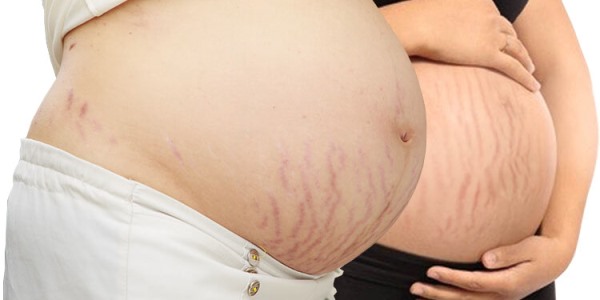

Stretch Marks in Pregnant Women
Although not dangerous, the appearance of stretch marks during pregnancy often makes pregnant women feel less confident or even disturbed. However, pregnant women do not need to worry, because there are several ways that can be done to disguise the stretch marks that appear. During pregnancy, the body will enlarge so that the skin will stretch to adjust to the changes that occur. This condition causes the elastic fibers under the surface of the skin to break and form fine lines called stretch marks. Parts of the body that are susceptible to the appearance of stretch marks are the breasts, stomach, buttocks, thighs, hips, and upper arms. The appearance of stretch marks is marked by purplish red lines or lines on the surface of the skin and in some pregnant women can be accompanied by itching.
Stages of stretch marks during pregnancy
- Stage one: At this stage, the stretch marks will appear pink. The stretched area of the stomach skin will also feel itchy, thin, and flat.
- Stage two: At this stage, the stretch marks will enlarge. The stretch marks become long, and wide with a reddish or purplish color.
- Stage three: At this stage, the stretch marks lose their reddish hue. Then, a few months after giving birth, the skin color begins to fade to pale white or gray. The shape or length of the stretch marks also becomes irregular.
Difference between white and red stretch marks
The following is an explanation of the differences between white and red stretch marks:
- Red Stretch Marks.
Fine red lines are a sign that stretch marks have just appeared on the surface of the skin. So, when a mother experiences drastic weight gain, red stretch marks can appear suddenly. This condition can be triggered because the skin stretches, its elasticity decreases, and then the blood vessels rise to the surface of the skin. - White Stretch Marks.
White stretch marks are a sign that the fine red lines that appeared on the mother’s body yesterday are starting to fade. So, when the blood vessels have started to go down and narrow again, the red stretch marks on the skin will slowly fade and change color to white.
Red stretch marks will be easier to overcome than stretch marks that are already white.
The way to overcome it is by doing the following:
- Use Retinoid Cream.
Mothers can use retinoid cream as a way to deal with stretch marks in pregnant women. Retinoid cream works by stimulating collagen in the skin. As a result, stretch marks can be disguised and the skin can return to looking normal. Mothers can apply retinoid cream twice a day after bathing. Apply the cream while gently massaging the area with stretch marks. - Laser Therapy.
If you want to remove stretch marks instantly, you can choose laser treatment at a fairly expensive cost. This laser therapy can help stimulate the growth of skin cells and collagen. Later, the results of fading stretch marks can be seen a few weeks after the treatment is carried out. This therapy can only be done after the mother gives birth. If done while the mother is still pregnant, the hot light from the laser can have a negative impact on the health of the fetus. - Microdermabrasion.
Mothers can also do microdermabrasion treatment to overcome stretch marks. This treatment is done using the exfoliation method or skin peeling using micro crystals. Microdermabrasion aims to remove dead skin cells and stimulate the growth of new skin cells. The requirements for this treatment are the same as laser therapy, which can only be done after the mother gives birth.
How to deal with white stretch marks
All of the above therapies can be used to disguise red and white stretch marks. So, there is no difference in how to deal with both. However, if the red stretch marks have turned white, it is advisable to maintain ideal body weight and shape. The goal is to prevent weight gain, skin from stretching further, and red stretch marks that can turn white no longer appear.
Causes of stretch marks
Stretch marks are caused by stretching that occurs in the skin. The severity of stretch marks in each pregnant woman varies. This can be influenced by several factors, namely:
- Pregnancy with excess amniotic fluid.
- The fetus is quite large or is a twin.
- Being pregnant at a young age which causes the skin to stretch more.
- A history of stretch marks during pregnancy in the biological family, such as the mother, sister, or grandmother.
How to prevent stretch marks in pregnant women
Here are some steps that pregnant women can take to prevent the appearance of stretch marks during pregnancy:
- Fulfill your fluid needs by drinking at least 8 glasses of water every day.
- Take vitamin E supplements or apply vitamin E cream to the skin surface, but consult a doctor first before using it.
- Eat nutritious foods, such as fruits and vegetables, and avoid foods high in fat, sugar, and salt.
- Do regular exercise, including prenatal exercise, to keep your skin elastic.
- Use lotion on your body to keep your skin moist, elastic, supple, and reduce itching.
How to deal with stretch marks after giving birth
In general, stretch marks will fade on their own within 6–12 months after giving birth. The lines that were originally reddish will fade to be lighter than the surrounding skin, but the texture remains the same. If the stretch marks do not go away and the mother feels uncomfortable, consult a dermatologist to treat it.
To treat stretch marks, your doctor may provide the following treatment:
- Hyaluronic acid gel with onion extract.
Studies show that using a gel containing a mixture of hyaluronic acid and onion extract can fade stretch marks after 12 weeks of regular use. - Retinoids (vitamin A).
Retinoids (vitamin A) can stimulate the formation of new cells and accelerate the growth of new collagen. As a result, the skin will become healthier. However, the use of retinoids must be according to a doctor’s prescription, especially for pregnant and breastfeeding mothers. - Laser.
Laser light has been proven to fade stretch marks on the skin’s surface. The heat effect of the laser can increase collagen growth, thereby shrinking dilated blood vessels.
Eliminating postpartum stretch marks can also be helped by natural methods. Although there is no scientific evidence regarding how effective these ingredients are for treating stretch marks, this may be another alternative that can be tried. Some natural ingredients that can be used to treat stretch marks in pregnant women are:
- Olive oil and coconut oil.
- Aloe vera.
- Honey.
- Egg whites.
- Lemon juice.
- Potato.
The way to use the natural ingredients above is the same, namely by applying them to the parts of the body that have stretch marks.
Stretch marks may not disappear completely, but they can be disguised over time. If you are bothered by stretch marks that appear during pregnancy or if the lines do not fade after giving birth, do not hesitate to consult a doctor to get the right treatment.