
Placental Abruption
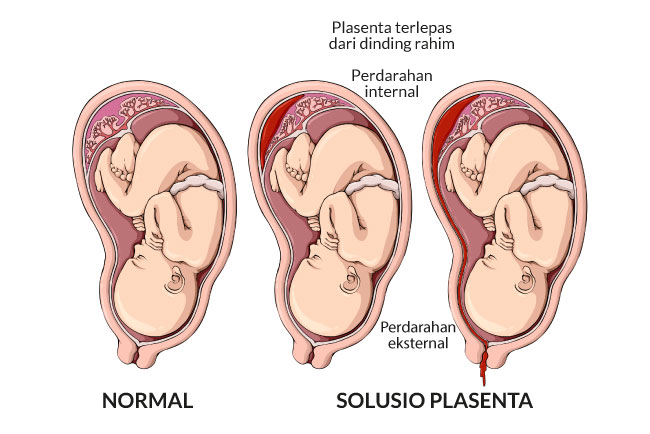
Bleeding during pregnancy, especially during late pregnancy, is usually caused by several things. One of them is caused by an abnormality in the placenta called placental abruption. Placental abruption or also known as placental abruption is a pregnancy complication in which the placenta detaches from the inner uterine wall before delivery, either completely or partially. Detachment of the placenta can cause the baby’s supply of nutrients and oxygen to decrease or be hampered.
The placenta grows in the mother’s womb during pregnancy and functions to provide nutrition and oxygen to the fetus in the womb, as well as removing metabolic waste from the baby’s body. The placenta attaches to the uterine wall. This organ, which is often referred to as the placenta, is also connected to the baby via the umbilical cord. Placental abruption risks endangering the lives of the mother and unborn baby if not treated immediately. This is because placental abruption can cause severe bleeding in the mother, as well as reduce the supply of nutrients and oxygen to the baby.
Placental abruption often occurs suddenly. In many cases, detachment of the placenta often occurs in the third trimester of pregnancy or a few weeks before delivery. Placental abruption is usually characterized by symptoms such as bleeding from intimate organs, severe abdominal pain, back pain, and uterine contractions as if giving birth. Bleeding that occurs in placental abruption is generally not much, because the blood can be trapped by the placenta so that it does not flow out.
Causes of Placental Abruption
Until now, the exact cause of placental abruption is not known. However, there are several conditions that can increase a pregnant woman’s risk of experiencing placental abruption, namely:
- Maternal hypertension.
- Maternal trauma such as a fall or motor vehicle accident.
- Smoking while pregnant.
- Alcohol consumption during pregnancy.
- Cocaine use during pregnancy.
- Short umbilical cord.
- Sudden uterine decompression.
- Retroplacental fibromyoma.
- Retroplacental bleeding due to needle puncture, such as in amniocentesis.
- Abnormalities of uterine blood vessels.
- Have a previous history of placental abruption.
- Chorioamnionitis.
- Premature rupture of membranes.
- Pregnant when the mother is more than 35 years old.
- Pregnant when the mother is less than 20 years old.
- Male fetus.
- Low social economic status.
- Elevated maternal serum alpha-fetoprotein.
- Subchorionic hematoma.
- Suffering from preeclampsia or eclampsia.
- Experiencing an injury to the stomach during pregnancy.
- Pregnant with twins.
Symptoms of placental abruption
The third trimester of pregnancy is a vulnerable time for placental abruption. The main symptom that indicates placental abruption is bleeding during pregnancy. However, this does not mean that all vaginal bleeding during pregnancy indicates placental abruption. The amount of bleeding varies and does not necessarily indicate the severity of placental detachment that occurs. Sometimes blood gets trapped in the uterus, so it doesn’t come out or bleeding occurs. As a result, sufferers are not aware that they are experiencing placental abruption.
Based on the symptoms, placental abruption is divided into several, namely:
- Placental abruption with no symptoms. Because it does not cause symptoms, this placental abruption is only discovered at birth and is characterized by blood clots or a dented area on the placenta.
- Placental abruption with mild symptoms (48 percent of cases), symptoms include:
- No bleeding or light vaginal bleeding.
- Mild uterine pain.
- The mother’s blood pressure and pulse are normal.
- There are no blood coagulation disorders (blood clotting process).
- There is no fetal distress.
- Placental abruption with moderate symptoms (27 percent of cases), symptoms include:
- No bleeding or light vaginal bleeding.
- Moderate-severe uterine pain with tetanic contractions.
- Increased maternal pulse with changes in blood pressure and orthostatic pulse (affected by standing/sitting position).
- Fetal distress.
- Hypofibrinogenemia.
- Placental abruption with severe symptoms (24 percent of cases)
-
- No bleeding to heavy vaginal bleeding.
- Severe and very painful uterine spasms (tetanic).
- Maternal shock.
- Hypofibrinogenemia.
- Coagulopathy.
- Fetal death.
Pregnant women need to have regular pregnancy checks from an obstetrician. This aims to enable doctors to determine the progress of the pregnancy, as well as detect abnormal conditions in the mother or fetus. If you experience symptoms of placental abruption, such as bleeding in the third trimester, you should immediately visit a doctor. This condition needs to be treated immediately to prevent fatal impacts.
Diagnosis and Treatment of Placental Abruption
Placental abruption is classified as an emergency condition. Therefore, the doctor will immediately carry out a physical examination on the pregnant woman, including observing the symptoms she is suffering from, such as bleeding or pain. Apart from the condition of the pregnant woman, the condition of the fetus also needs to be checked. One of them is the fetal heart rate. All of these examinations aim to determine the actions that need to be taken. In fact, the diagnosis of placental abruption or placental abruption can only be determined after delivery, namely by examining the placenta in the laboratory. However, several examinations, such as pregnancy ultrasound, blood tests, or urine tests, can be carried out on pregnant women to detect the possibility of placental abruption.
Treatment for placental abruption depends on the condition of the fetus and pregnant woman, gestational age, and the severity of the placental abruption. A placenta that has separated from the uterine wall cannot be reattached. Treatment aims to save the lives of pregnant women and the fetus they are carrying. If placental abruption or placental abruption occurs when the pregnancy has not reached 34 weeks, the obstetrician will ask the pregnant woman to be hospitalized so that her condition can be carefully observed. If the fetal heart rate is normal and the pregnant woman’s bleeding stops, this means that the placental abruption is not too serious and the pregnant woman can go home. However, obstetricians generally will give corticosteroid injections to accelerate the growth of the fetus’ lungs. This is done as an anticipation if the condition of the placental separation worsens, so delivery must be carried out immediately even though it is not yet due.
If placental abruption occurs when the gestational age is more than 34 weeks, the doctor will try to provide a delivery process that does not harm the mother and baby. If placental abruption is not severe, pregnant women can still give birth normally. However, if this is not possible, the obstetrician will perform a caesarean section. During labor, pregnant women who experience heavy bleeding may need help with blood transfusions. This is done to prevent pregnant women from experiencing blood shortages.
Complications of Placental Abruption
Placental abruption or placental abruption can cause serious complications, both for mother and baby. These complications can include:
Complications that pregnant women may experience with placental abruption:
- Blood clotting disorders.
- Hypovolemic shock due to blood loss.
- Kidney failure or failure of other body organs. Need for blood transfusion.
Severe bleeding can cause pregnant women to undergo surgery to remove the uterus (hysterectomy). This condition can even cause death in pregnant women.
Complications that babies can experience due to placental abruption are:
- Not getting enough oxygen.
- Premature birth, so the baby is born with a low birth weight.
- The fetus’s nutritional and oxygen intake is disrupted, so that the growth of the fetus in the womb is also hampered.
- Died in the womb, if the condition of placental abruption is considered severe.
Prevention of Placental Abruption
Placental abruption or placental abruption cannot be prevented. However, there are several things that can be done to reduce the risk and anticipate placental separation. These efforts include:
- Consume food with balanced nutritional content.
- Consume enough water.
- Avoid heavy physical activity during pregnancy.
- Avoid activities with the risk of falling or injury to the stomach during pregnancy.
- Don’t smoke and don’t take drugs, especially during pregnancy.
- Regularly check with your obstetrician or midwife during pregnancy, especially if you are over the age of 40.